

Feral Pigeon
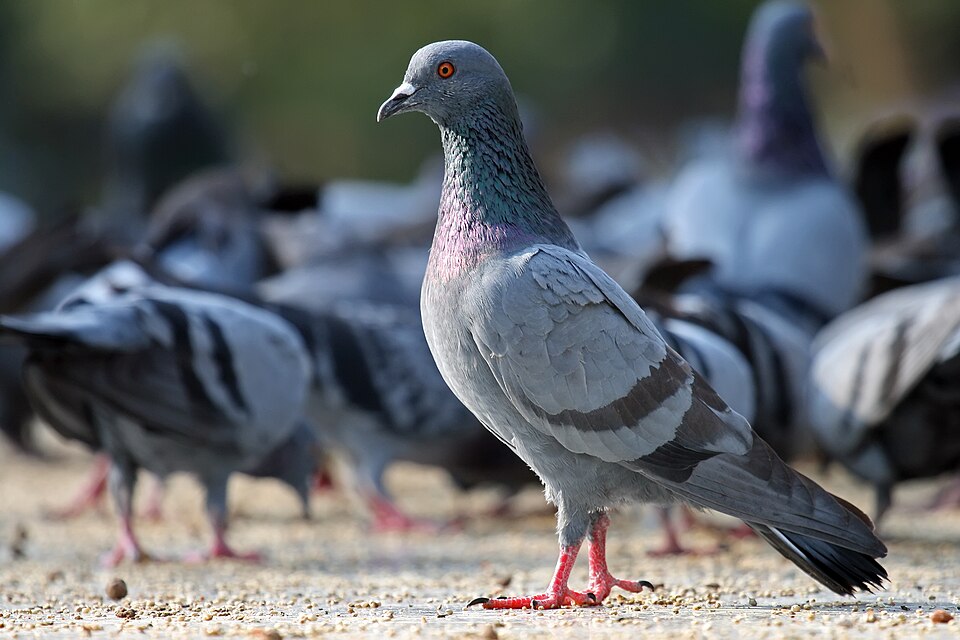
Image Attribution:Muhammad Mahdi Karim (GFDL 1.2 or FAL), via Wikimedia Commons
🔍 Overview
Common resident. The Feral Pigeon is one of Sussex’s most familiar birds, found in towns, cities, villages and around farms. Descended from the wild Rock Dove, it is highly adaptable and can be seen throughout the year.
🪶 Key Identification Features
Size: Medium-sized pigeon (31–34 cm)
Plumage: Highly variable. Most have bluish-grey upperparts, two black wing bars, an iridescent green and purple neck, and a pale rump. Many birds show white, brown or darker colour variations.
Shape: Plump body with a small head, broad rounded wings and a relatively short tail.
Flight: Fast, direct flight with quick wingbeats, often in flocks.
🗺️ Habitat & Distribution
Abundant across Sussex in urban areas, towns, villages, industrial estates, parks, gardens and around farmland. Originally associated with cliffs, many still nest on coastal cliffs where they resemble their wild ancestors.
🎶 Voice & Behaviour
A familiar, soft cooing call. Often seen feeding on the ground, perching on rooftops and gathering in large flocks. Pairs form strong bonds and breed throughout much of the year where food is plentiful.
📸 Birding Tip
Look for the iridescent neck and two distinct black wing bars. Although often overlooked, Feral Pigeons show remarkable variation in plumage, making them surprisingly interesting to observe and photograph.
Scientific Name: Columba livia
Status: Very Common