

Great Bustard
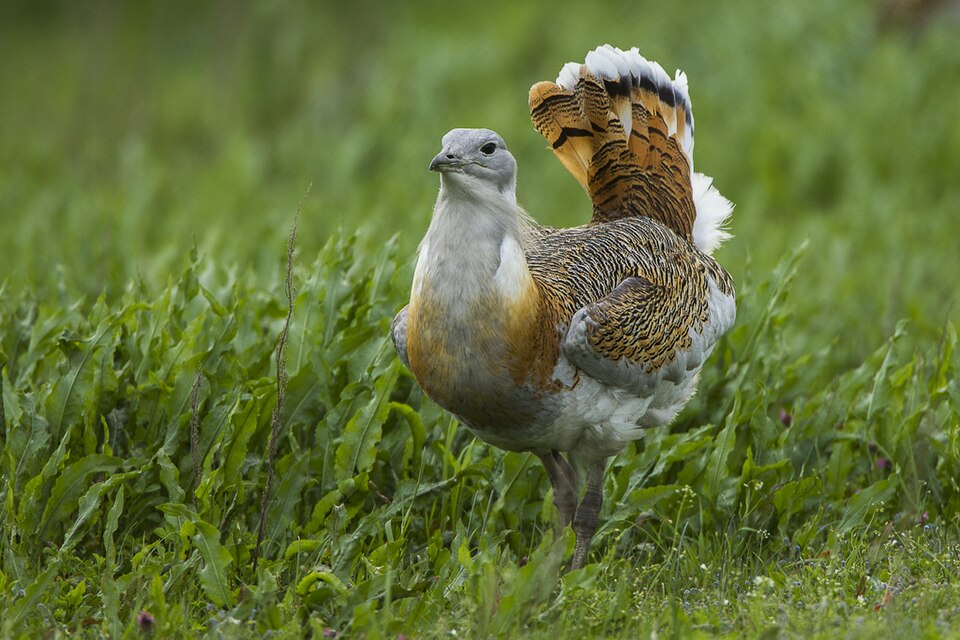
Image Attribution: Francesco Veronesi from Italy, CC BY-SA 2.0, via Wikimedia Commons

🔍 Overview
Europe’s heaviest flying bird, now reintroduced in parts of the UK. Still an extremely rare vagrant in Sussex with only historic or exceptional flyover records. Native to Iberia and Morocco; with fragmented populations through central and southeast Europe to Turkey and east to central Siberia. Extinct in Great Britain in 1832; since 2013 it has been the subject of a re-introduction programme led by the Great Bustard Group in Wiltshire; under licence from DEFRA.
🪶 Key Identification Features
Massive size, long legs, and thick neck
Males: orangey chest band, white underparts
White wing flash in flight
🗺️ Habitat & Distribution
If seen at all in Sussex, it would likely be a wandering individual from reintroduction schemes. Possible over arable land or Downs, especially in late autumn or winter.
🎶 Voice & Behaviour
Generally silent. On land, they move slowly and can be surprisingly hard to spot despite their size.
Scientific Name: Otis tarda
Status: Very Rare