

Great Skua
🔍 Overview
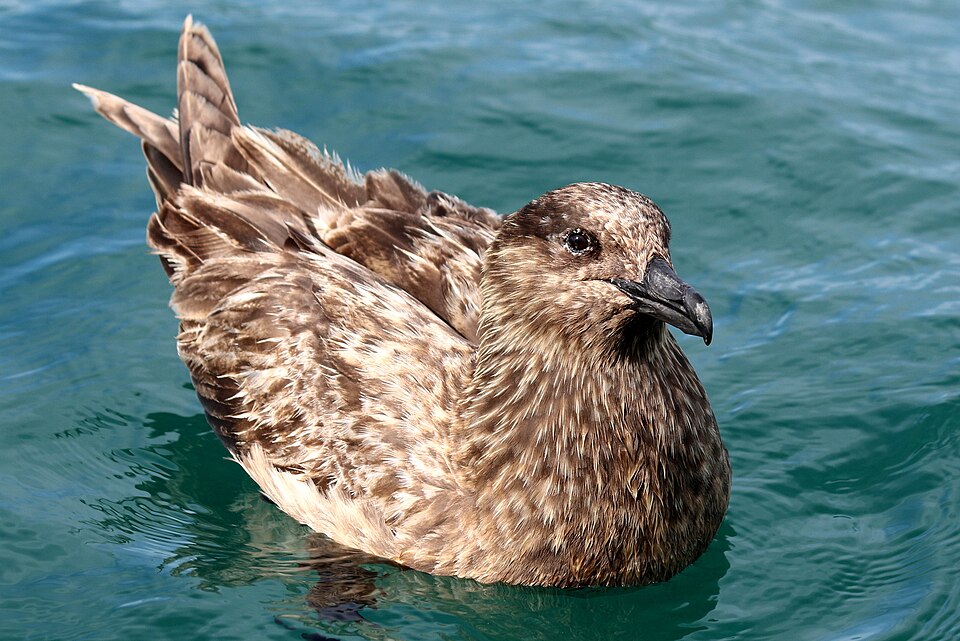
Bold, powerful and unmistakable, the Great Skua (often known as the Bonxie) is the largest skua regularly seen in Sussex. An uncommon but regular passage migrant, it is seen mainly during autumn seawatches, with smaller numbers in spring. Unlike the more agile Arctic Skua, the Great Skua relies on its strength to dominate other seabirds, stealing food, hunting birds and scavenging whenever the opportunity arises.
🪶 Key Identification Features
Size: Large (53–58 cm)
Plumage: Dark brown overall with pale streaking on the head and upperparts
Distinctive Marks: Bold white wing flashes visible in flight
Bill: Heavy, dark and strongly hooked
Tail: Broad and wedge-shaped with no long tail streamers
Flight: Powerful, direct and heavy, with slow, deep wingbeats
🗺️ Habitat & Distribution
Usually seen offshore during migration, particularly after strong south-westerly winds. Best observed from Sussex seawatching sites such as Goring Gap, Worthing Beaches, Brighton Marina, Splash Point and Beachy Head. Most records occur between August and October, with fewer birds passing in spring.
🎶 Voice & Behaviour
Usually silent on passage. Exceptionally bold and aggressive, Great Skuas frequently harass gulls, gannets and other seabirds until they drop their food. They will also attack weakened birds and readily scavenge, earning a reputation as one of the North Atlantic’s most formidable seabirds.
🍴 Diet
Feeds on fish, seabirds, eggs, carrion and discarded fish. Well known for kleptoparasitism, forcing other seabirds to surrender their catch, but also an accomplished predator in its own right.
📸 Birding Tip
Look for a bulky, dark seabird with striking white wing flashes flying low over the sea. Great Skuas are most likely after strong south-westerly winds during late summer and autumn, when they often pass close to shore. Their powerful, purposeful flight and robust shape make them easier to distinguish from the slimmer Arctic Skua.
Scientific Name: Stercorarius skua
Status: Fairly Common