🔍 Overview A once-regular migrant now much rarer in the UK. Occasionally reaches Sussex on autumn passage. 🪶 Key Identification Features Olive-grey head, yellow throat Pink bill and legs Warm brown upperparts 🗺️ Habitat & Distribution Best chance is coastal farmland or clifftop fields around Beachy Head or Pagham in late August to early October....
Location: Chantry and Kithurst Hill
Wryneck
🔍 Overview A scarce spring and autumn migrant in Sussex, mostly found in coastal scrub or gardens. Last bred in 1944. 🪶 Key Identification Features Grey-brown with intricate barring Long tail, cryptic plumage Snake-like neck twisting motion 🗺️ Habitat & Distribution Seen at Cissbury and Chanctonbury in late August–September and April. 🎶 Voice & Behaviour Distinctive...
Black Stork
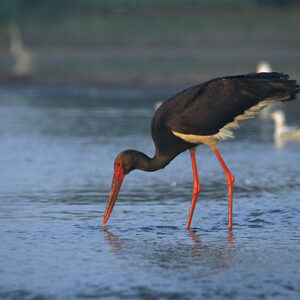
🔍 Overview Rare vagrant. An elegant and elusive relative of the White Stork, Black Storks are rare spring and summer vagrants in Sussex, typically seen during continental drift migration. 🪶 Key Identification Features Size: Large (95–100 cm tall) Plumage: Glossy black with a green-purple sheen; white belly Bill & Legs: Red Flight: Soars with neck...
Dotterel
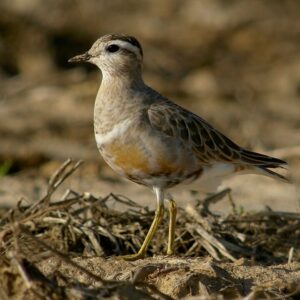
🔍 Overview A beautifully patterned plover, scarce passage migrant through Sussex, mostly seen in spring. 🪶 Key Identification Features Chestnut belly and white breast band (in adults) Broad white supercilium Compact and upright posture 🗺️ Habitat & Distribution Prefers short turf on hills or open farmland during passage. Sightings have occurred on South Downs escarpments...
Woodpigeon
🔍 Overview The most widespread and abundant pigeon in Sussex and across the UK. Common in gardens, farmland, parks, and woodlands. 🪶 Key Identification Features Size: Large pigeon (38–44 cm) Plumage: Grey overall with pinkish breast, distinctive white neck patch and white wing bars visible in flight Other: Broad wings and long tail 🗺️ Habitat...
Red-legged Partridge
Common introduced resident. Population augmented annually by captive bred stock.
Yellowhammer
🔍 Overview A striking farmland bunting with a memorable song, Yellowhammers remain locally common across Sussex countryside. 🪶 Key Identification Features Size: Medium (16 cm) Male: Bright yellow head, chestnut rump, brown-streaked back Female: Duller but still yellow-tinged Flight: Flitting and bouncing 🗺️ Habitat & Distribution Favors hedgerows, arable field margins, and downland. Found near...
Wren
🔍 Overview Britain’s most widespread breeding bird, the Wren is tiny but loud, often found in tangled undergrowth across Sussex. 🪶 Key Identification Features Size: Tiny (9 cm) Plumage: Brown with fine barring Tail: Short and held upright Bill: Fine and down-curved 🗺️ Habitat & Distribution Occurs in gardens, woodlands, hedgerows, and marshes—virtually everywhere across...
White-tailed Eagle
🔍 Overview Britain’s largest bird of prey, occasionally spotted in Sussex skies thanks to reintroduction programs on the Isle of Wight. 🪶 Key Identification Features Size: Huge (wingspan up to 2.4 m) Plumage: Brown overall with paler head and neck Tail: Adults have white tail Bill: Large and hooked 🗺️ Habitat & Distribution Rare visitor...
Song Thrush
🔍 Overview A sweet-voiced garden and woodland thrush with a stronghold in Sussex. Known for repeating phrases in its rich song. 🪶 Key Identification Features Size: Medium (23 cm) Plumage: Brown above, creamy below with dark spots Bill: Yellowish, short Behaviour: Often seen cracking snail shells 🗺️ Habitat & Distribution Common in gardens, parks, woodlands,...