Bird Month (Small Numbers): December

Home » December » Page 3
Northern Wheatear
Bird

Northern Wheatear

📍 Local Expert Tip “The Wheatear is a a regular passage migrant in Spring and Autumn. Shoreham Fort often records the first birds heading north in Spring from mid-March but can be found anywhere along the coast. Regularly seen during Autumn migration in the Downs along the Monarch’s Way footpath, Truleigh Hill, Cissbury Ring etc.” 🔍...

Marsh Harrier
Bird

Marsh Harrier

🔍 Overview A large, graceful raptor of reedbeds and marshes. Recolonised Sussex in recent years after a long absence. Scarce breeder since 2004. 🪶 Key Identification Features Long wings held in a shallow “V” Male: Pale head and underwings Female/Juvenile: Dark with golden crown 🗺️ Habitat & Distribution Seen at Chantry, Cissbury, and Upper Adur...

Manx Shearwater
Bird

Manx Shearwater

🔍 Overview A true ocean wanderer, the Manx Shearwater is seen passing Sussex headlands on migration—graceful and fast over waves.Fairly common spring to autumn passage migrant. 🪶 Key Identification Features Size: Medium seabird (30–38 cm)Plumage: Black above, white belowDistinctive Marks: Clean contrast in plumageBill: Thin and hookedTail: ShortFlight: Low glides with stiff wings 🗺️ Habitat &...

Mandarin Duck
Bird

Mandarin Duck

🔍 Overview An introduced species from Asia, now thriving in parts of Sussex. Arguably the most ornamental duck in Britain. 🪶 Key Identification Features Male: Bright orange sail-like feathers, ornate and multicoloured Female: Subtly patterned grey with white eye-ring Small and short-tailed 🗺️ Habitat & Distribution Resident in wooded lakes and slow rivers like Arundel...

Little Stint
Bird

Little Stint

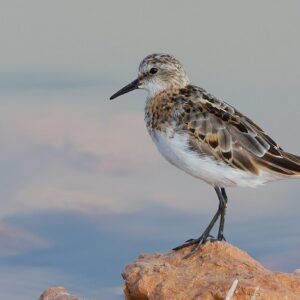
🔍 Overview A tiny Arctic-breeding wader seen on passage, especially in autumn. One of the smallest shorebirds in Sussex. 🪶 Key Identification Features Small, delicate wader with fine bill and short legs Sandy brown above, white below Juveniles show neat scaly pattern 🗺️ Habitat & Distribution Passage migrant at Pagham Harbour, Rye Harbour, and Medmerry...

Lesser Whitethroat
Bird

Lesser Whitethroat

📍 Local Expert Tip “The Lesser Whitethroat locally, is far less common than Common Whitethroat and much more elusive. Best found by learning its song and then patiently waiting for a view. Mill Hill generally has 2 – 3 pairs and the Downs Link path heading north from the A27 is another reliable location.” 🔍 Overview...

Lesser Spotted Woodpecker
Bird

Lesser Spotted Woodpecker

🔍 Overview Britain’s smallest and rarest woodpecker. Once more widespread in Sussex, now very scarce and local. 🪶 Key Identification Features Size of a sparrow Black and white barred back Male: Small red crown; Female: Lacks red 🗺️ Habitat & Distribution Prefers mature deciduous woodland, especially West Sussex Weald and Ashdown Forest. Most active in...

House Martin
Bird

House Martin

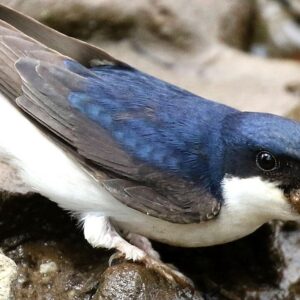
🔍 Overview Common but declining summer visitor to Sussex, House Martins are aerial insectivores seen from April to November, often nesting under eaves in towns and villages. 🪶 Key Identification Features Size: Small (13 cm) Plumage: Glossy blue-black upperparts, white underparts Distinctive Marks: White rump, short forked tail Bill: Short and wide Flight: Fast, swooping...

Great White Egret
Bird

Great White Egret

🔍 Overview A striking, large white heron now increasingly regular in Sussex, both on migration and as a breeder. 🪶 Key Identification Features Pure white plumage Long yellow bill (turns black in breeding season) Taller than Little Egret with slow, majestic flight 🗺️ Habitat & Distribution Seen at Pulborough Brooks, Amberley Wild Brooks, and Rye...

Goshawk
Bird

Goshawk

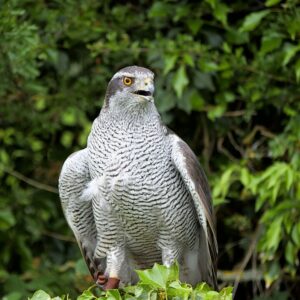
🔍 Overview A powerful and secretive raptor, often dubbed the ‘phantom of the forest’. Rarely seen, but breeds in parts of Sussex. 🪶 Key Identification Features Size: Larger and bulkier than a Sparrowhawk Male: Slate grey above, pale below with fine barring Female: Bigger, browner Broad wings, long tail 🗺️ Habitat & Distribution Breeds in...