🔍 Overview A winter visitor, the Fieldfare arrives in numbers across Sussex from October to March. A striking plump thrush with a loud contact call. 🪶 Key Identification Features Size: Medium (24–25 cm) Plumage: Grey head, reddish-brown back, heavily spotted underparts Distinctive Marks: White rump visible in flight Bill: Yellow with dark tip Tail: Longish...
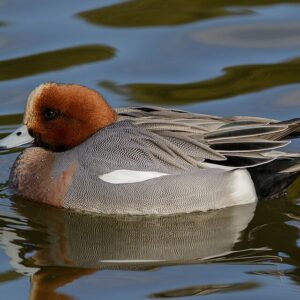
Eurasian Wigeon
🔍 Overview A common and elegant winter duck, the Wigeon forms large flocks on Sussex wetlands. Easily identified by its whistling call. 🪶 Key Identification Features Size: Medium duck (45–51 cm)Plumage: Males: pinkish breast, cream crown; Females: light brownDistinctive Marks: Male’s yellow crown and whistling callBill: Short and bluishTail: NeatFlight: Strong, fast-winged 🗺️ Habitat &...
Eurasian Teal
🔍 Overview The UK’s smallest dabbling duck, the Teal is a common winter visitor to Sussex wetlands. Males are striking, females subtly patterned. 🪶 Key Identification Features Size: Small duck (34–38 cm)Plumage: Males: chestnut head with green stripe; Females: mottled brownDistinctive Marks: Green wing patch (speculum)Bill: Small and darkTail: Neat, pointedFlight: Fast with rapid wingbeats...
Egyptian Goose
🔍 Overview A non-native species now breeding freely in parts of Sussex. Recognisable and increasingly widespread. 🪶 Key Identification Features Pale buff plumage with dark chest patch Eye-ring and chestnut eye patch Pink legs, loud honking call 🗺️ Habitat & Distribution Most frequent around Pulborough Brooks, Upper Adur Valley, and Brooklands, lakes and reservoirs. Present...
Curlew Sandpiper
🔍 Overview A scarce passage wader, most often seen in Sussex during autumn. Breeds in Arctic Siberia and winters in Africa. 🪶 Key Identification Features Breeding plumage: Reddish underparts, long downcurved bill Non-breeding: Pale grey above, white below Other: Slim, elegant wader with long legs 🗺️ Habitat & Distribution Best seen at Pagham Harbour, Rye...
Common Snipe
📍 Local Expert Tip “The Snipe is a winter visitor from October to April with a peak in January and February. Often difficult to see but on high tides flocks of more than 100 get flushed out of the salt marsh in the RSPB Adur section and become more visible when viewing from the Norfolk Bridge.”...
Common Pochard
🔍 Overview A diving duck, the Pochard is a regular winter visitor to Sussex lakes and gravel pits. Males are handsome with a rusty head and striking grey body. 🪶 Key Identification Features Size: Medium (42–49 cm)Plumage: Males: grey with chestnut head; females: brownDistinctive Marks: Rounded head, red eyes (male)Bill: Dark with pale bandTail: ShortFlight:...
Common Guillemot
🔍 Overview A sleek seabird, the Common Guillemot is mostly seen off Sussex during winter or on spring sea-watches, though breeding colonies lie further west. Last bred in 1904. 🪶 Key Identification Features Size: Medium (38–43 cm)Plumage: Chocolate-brown head and back, white underpartsDistinctive Marks: Thin bill, upright posture when perchedBill: Slim and blackTail: Very shortFlight:...
Cattle Egret
🔍 Overview Once rare, now a regular and expanding presence in Sussex, especially during winter. It is an increasing visitor and bred for the first time in 2020. 🪶 Key Identification Features Winter: White plumage, short yellow bill Breeding: Buff patches on head, chest, and back Other: Smaller and stockier than Little Egret 🗺️ Habitat...
Caspian Gull
🔍 Overview An increasingly regular large gull in Sussex, especially in winter. Tricky to identify but becoming more familiar to keen observers. 🪶 Key Identification Features Adult: Long-legged, pale grey mantle, small dark eye Other: Long, parallel-sided bill, flat-headed profile Juvenile: Pale underwing, long-winged appearance 🗺️ Habitat & Distribution Best found at landfill sites, gull...