🔍 Overview A scarce but increasing visitor and occasional breeder in Sussex, especially in coastal wetlands. 🪶 Key Identification Features Large white bird with spoon-shaped bill Black legs, yellowish breast patch in breeding season Often rests with neck tucked back 🗺️ Habitat & Distribution Regular at Rye Harbour, Pagham Harbour, and Pulborough Brooks, mainly from...
Glossy Ibis
🔍 Overview Once a major rarity, now an increasingly regular visitor to Sussex, with occasional overwintering birds. 🪶 Key Identification Features Dark, iridescent plumage with green and bronze sheen Long, down-curved bill Long legs and neck 🗺️ Habitat & Distribution Regularly seen at wetland reserves like Pulborough Brooks, Rye Harbour, and Pagham Harbour. Most likely...
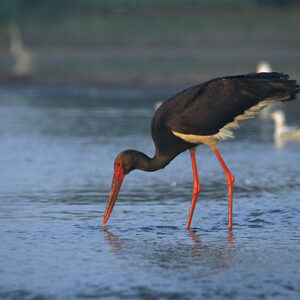
Black Stork
🔍 Overview Rare vagrant. An elegant and elusive relative of the White Stork, Black Storks are rare spring and summer vagrants in Sussex, typically seen during continental drift migration. 🪶 Key Identification Features Size: Large (95–100 cm tall) Plumage: Glossy black with a green-purple sheen; white belly Bill & Legs: Red Flight: Soars with neck...
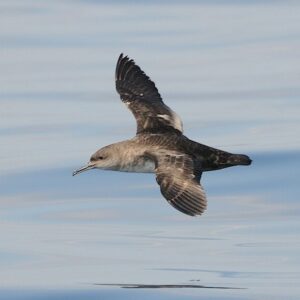
Balearic Shearwater
🔍 Overview A critically endangered seabird from the western Mediterranean, seen irregularly off the Sussex coast on passage. Very scarce spring to autumn visitor. 🪶 Key Identification Features Dusky brown above, paler below Slender wings and rapid, shearing flight Typically darker overall than Manx Shearwater 🗺️ Habitat & Distribution Best spotted during sea-watches off Selsey...
Storm Petrel
🔍 Overview Britain’s smallest seabird, rarely seen from land except during strong onshore winds. 🪶 Key Identification Features Tiny blackish seabird with white rump Bat-like fluttering flight with short glides Often hovers above waves, “pattering” on surface 🗺️ Habitat & Distribution Watch from Selsey Bill or Seaford Head during August–October gales. Extremely challenging to spot...
Puffin
🔍 Overview Very scarce visitor; most frequently recorded in spring. Famous auk species that breeds in the UK but only seen in Sussex during offshore passage or after storms. 🪶 Key Identification Features Black upperparts, white underparts Bright orange legs and colourful bill Rounded head and short neck 🗺️ Habitat & Distribution Rarely seen from...
Red-necked Phalarope
🔍 Overview A scarce passage migrant, mostly in spring and autumn. Often spins in circles on water while feeding. 🪶 Key Identification Features Breeding Female: Striking with red neck, black mask, grey back Non-breeding/Immature: Pale grey and white Size: Small, dainty (18–20 cm) 🗺️ Habitat & Distribution Prefers shallow freshwater pools or coastal lagoons—recorded at...
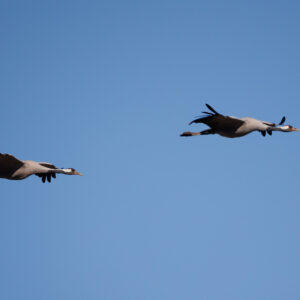
Crane
🔍 Overview Once extirpated from the UK, this majestic bird is making a comeback. Rare but increasing visitor to Sussex, especially in migration seasons. 🪶 Key Identification Features Tall, elegant bird with long legs and neck Grey body, black wingtips Red crown patch and bushy rear plumes 🗺️ Habitat & Distribution Best seen flying overhead...
Ruddy Duck
🔍 Overview A North American species introduced to the UK, now nearly eradicated due to a control programme. Rare in Sussex today. 🪶 Key Identification Features Male: Chestnut body, sky-blue bill, stiff tail often held upright Female: Brown with dark cap and pale face Size: Small diving duck (35–43 cm) 🗺️ Habitat & Distribution Formerly...
Barnacle Goose
🔍 Overview Most Barnacle Geese seen in Sussex are feral, but small numbers of wild birds may arrive in winter, particularly in hard weather. 🪶 Key Identification Features Striking black-and-white plumage White face with black breast and neck Compact, goose-shaped body 🗺️ Habitat & Distribution Feral birds occur year-round at sites like Arundel WWT or...