🔍 Overview A smart, black-and-white songbird seen mainly on spring and autumn passage in Sussex. Scarce breeder. 🪶 Key Identification Features Male: Black above, white below, white wing patches Female: Browner tones Slightly fidgety, flicks wings frequently 🗺️ Habitat & Distribution Passage migrant in April–May and August–September, mostly in woodland and coastal scrub like Cissbury...
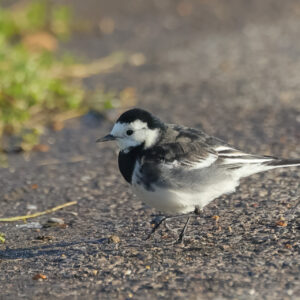
Pied Wagtail
🔍 Overview Common resident; passage migrant and winter visitor. A highly mobile black-and-white bird with a constantly bobbing tail, common across Sussex towns and countryside. 🪶 Key Identification Features Size: Small (18 cm) Plumage: Black back and bib, white face, grey wings Tail: Long and always wagging Flight: Quick and bounding 🗺️ Habitat &...
Pintail
The Pintail is a sleek and elegant winter duck in Sussex, known for its long tail and graceful posture. A regular visitor to floodplains and estuaries. 🪶 Key Identification Features Size: Large (55–65 cm)Plumage: Chocolate-brown head (male), pale grey body, long tailDistinctive Marks: Needle-like tail, white neck stripeBill: Blue-greyTail: Long and pointed in malesFlight: Smooth and...
Mute Swan
🔍 Overview A majestic symbol of British waterways, the Mute Swan is common across Sussex’s lakes, rivers, and estuaries. 🪶 Key Identification Features Size: Very large (140–160 cm wingspan)Plumage: All whiteDistinctive Marks: Orange bill with black knobBill: Large and curvedTail: ShortFlight: Heavy wingbeats with loud whoosh 🗺️ Habitat & Distribution Seen across Sussex on rivers, lakes,...
Northern Wheatear
📍 Local Expert Tip “The Wheatear is a a regular passage migrant in Spring and Autumn. Shoreham Fort often records the first birds heading north in Spring from mid-March but can be found anywhere along the coast. Regularly seen during Autumn migration in the Downs along the Monarch’s Way footpath, Truleigh Hill, Cissbury Ring etc.” 🔍...
Nuthatch
🔍 Overview An acrobatic woodland resident that creeps down tree trunks headfirst. Widespread in Sussex’s mature broadleaf woodlands. 🪶 Key Identification Features Size: Medium-small (14 cm) Plumage: Blue-grey upperparts, buff underparts Markings: Bold black eye-stripe Posture: Often seen head-down on tree trunks 🗺️ Habitat & Distribution Frequents deciduous woodlands, parks, and large gardens with mature...
Osprey
🔍 Overview A striking fish-eating raptor that passes through Sussex on spring and autumn migration. 🪶 Key Identification Features Large with long wings and narrow “M” shape in flight White underparts, dark eye-stripe Hovers over water before diving 🗺️ Habitat & Distribution Regularly seen at Lower Adur Valley, and along the coast in March–May and...
Merlin
🔍 Overview The UK’s smallest falcon, a fierce and fast hunter often seen darting low over open country. Winter visitor in Sussex. 🪶 Key Identification Features Small and compact Male: Blue-grey above, orange below Female/Juv.: Heavily streaked and brown 🗺️ Habitat & Distribution Seen in winter on South Downs, Chantry and Cissbury, and heathland like...
Mistle Thrush
🔍 Overview Larger and bolder than the Song Thrush, Mistle Thrushes are widespread across Sussex in woodland edges, parks, and open countryside. 🪶 Key Identification Features Size: Large (27 cm) Plumage: Greyish-brown back, bold spots on pale chest Posture: Upright and alert Flight: Strong and direct 🗺️ Habitat & Distribution Common in parkland, churchyards, and...
Moorhen
🔍 Overview Common in Sussex wetlands, the Moorhen is a dark, duck-sized waterbird with a red bill and a quirky personality. 🪶 Key Identification Features Size: Medium (30–35 cm)Plumage: Dark brown-black with white flashesDistinctive Marks: Red bill with yellow tipBill: Red, triangularTail: Short and flicked upwardFlight: Clumsy, weak flier 🗺️ Habitat & Distribution Everywhere from garden...