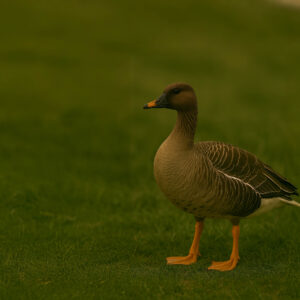
🔍 Overview Scarce winter visitor and passage migrant, arriving from Russia to spend the colder months in mild wetland areas. European race (A. a. albifrons) is red listed species of high conservation concern. 🪶 Key Identification Features White patch around bill base Black belly bars Orange legs and pinkish bill (Russian race) 🗺️ Habitat &...
White-tailed Eagle
🔍 Overview Britain’s largest bird of prey, occasionally spotted in Sussex skies thanks to reintroduction programs on the Isle of Wight. 🪶 Key Identification Features Size: Huge (wingspan up to 2.4 m) Plumage: Brown overall with paler head and neck Tail: Adults have white tail Bill: Large and hooked 🗺️ Habitat & Distribution Rare visitor...
Willow Warbler
🔍 Overview A sweet-voiced migrant warbler, the Willow Warbler breeds in Sussex’s open scrub and young woodland during spring and summer. 🪶 Key Identification Features Size: Small (11 cm) Plumage: Greenish-brown above, pale yellow underparts Legs: Pale Supercilium: Clear yellowish eye stripe 🗺️ Habitat & Distribution Found in young woodland, scrub, and heathland—notably Cissbury Ring....
Water Pipit
🔍 Overview A scarce winter visitor and passage migrant, usually found on wet meadows and saline lagoons. 🪶 Key Identification Features Greyish upperparts, clean pale underparts Pale supercilium and slender bill More refined than Rock Pipit 🗺️ Habitat & Distribution Regular at Pulborough Brooks, Amberley Wild Brooks, and Cuckmere Haven from October–April. 🎶 Voice &...
Water Rail
🔍 Overview A secretive marsh bird heard more often than seen, found in reedbeds and wetland edges. 🪶 Key Identification Features Grey face and underparts Brown back with black streaking Long red bill and spidery toes 🗺️ Habitat & Distribution Resident at Brooklands, Woods Mill, Arundel WWT, Pulborough Brooks, and Lancing Beach and Widewater. Can...
Waxwing
🔍 Overview A striking winter visitor from Scandinavia, appearing in irruption years (every few winters) and favouring berry-laden trees. 🪶 Key Identification Features Pinkish-grey body Prominent crest, black mask Yellow and red wing markings 🗺️ Habitat & Distribution Unpredictable; in irruption winters, flocks can be found in urban areas, supermarket car parks, and ornamental trees...
Whinchat
🔍 OverviewA charming migrant seen in Sussex during spring and autumn passage. Prefers rough fields and heathland edges. Rare summer visitor; last bred in 1999. Very rare in winter. 🪶 Key Identification Features Size: Small (13–14 cm) Plumage: Males orange-breasted with pale supercilium Distinctive Marks: Bold white eye stripe, pale throat Bill: Short and thin...
White Stork
🔍 Overview Once extinct in the UK, White Storks are now breeding again in Sussex thanks to reintroduction at Knepp Estate. 🪶 Key Identification Features Size: Very large (100–115 cm tall) Plumage: White body, black flight feathers Bill & Legs: Long and red Flight: Glides on broad wings, often seen soaring 🗺️ Habitat & Distribution...
Tufted Duck
🔍 OverviewA smart and common diving duck found year-round on Sussex lakes and reservoirs. Easily identified by its black-and-white plumage and diving behaviour. 🪶 Key Identification Features Size: Medium (42–48 cm) Plumage: Males black with white sides, females brown Distinctive Marks: Males have a drooping head tuft Bill: Blue-grey with black tip Tail: Short Flight:...
Tundra Bean Goose
🔍 Overview A scarce winter visitor to Sussex, typically in cold spells and often among other grey geese. 🪶 Key Identification Features Dark brown plumage Orange legs and bill (with a black base) Stockier and darker than Pink-footed Goose 🗺️ Habitat & Distribution Most likely in the Arun Valley, Amberley Wild Brooks, or among White-fronted...