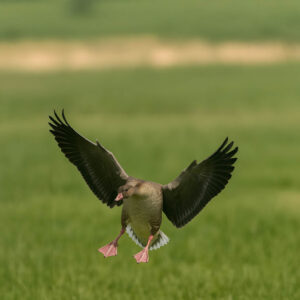
🔍 Overview A rare winter visitor to Sussex, usually involving vagrants from Norfolk or Scotland. Increasingly recorded. 🪶 Key Identification Features Smaller and slimmer than Greylag Pink bill band and legs Grey-brown plumage, darker head 🗺️ Habitat & Distribution Seen in winter flocks of geese, especially Cuckmere Valley, Amberley Wild Brooks, and Rye Harbour. 🎶...
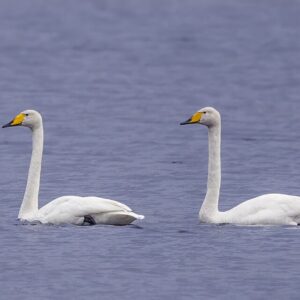
Whooper Swan
🔍 Overview A scarce winter visitor to Sussex, more regular in northern England but occasionally recorded in the south. 🪶 Key Identification Features Large white swan with long neck Yellow and black bill (yellow extends beyond nostrils) Loud, bugling call 🗺️ Habitat & Distribution Occasionally seen at Amberley Wild Brooks, Pulborough, or Arlington Reservoir in...
Ruddy Shelduck
🔍 Overview A striking, exotic-looking waterfowl. Rare in Sussex; birds may be either wild wanderers from the continent or escapes from collections. Breeds in SE Europe and across central and east Asia with naturalised populations in central Europe. Rare vagrant from wild or naturalised populations or escape from captivity. 🪶 Key Identification Features Size: Slightly...
Woodlark
🔍 Overview A rare but locally breeding songbird of open heath and forestry rides in Sussex. Scarce resident and very scarce passage migrant. 🪶 Key Identification Features Short tail, broad wings White supercilium curving behind the head Buff with dark streaks 🗺️ Habitat & Distribution Nesting pairs found in Ashdown Forest, The Mens, and Broadwater...
Wren
🔍 Overview Britain’s most widespread breeding bird, the Wren is tiny but loud, often found in tangled undergrowth across Sussex. 🪶 Key Identification Features Size: Tiny (9 cm) Plumage: Brown with fine barring Tail: Short and held upright Bill: Fine and down-curved 🗺️ Habitat & Distribution Occurs in gardens, woodlands, hedgerows, and marshes—virtually everywhere across...
Yellow Wagtail
🔍 Overview A colourful migrant seen in Sussex mainly on spring and autumn passage, occasionally breeding in lowland wet meadows. 🪶 Key Identification Features Bright yellow underparts Olive-green upperparts Greyish or brownish head depending on race 🗺️ Habitat & Distribution Seen in coastal fields, arable land, and around Goring Gap, Upper Adur Valley, and Cissbury...
Yellow-legged Gull
🔍 Overview A large, robust gull mainly seen in Sussex in late summer and early autumn, with a few year-round. 🪶 Key Identification Features Grey mantle darker than Herring Gull Yellow legs and red spot on bill Fierce-looking eyes with dark surround 🗺️ Habitat & Distribution Most common at Brighton Marina, Shoreham Harbour, Goring Gap,...
Yellowhammer
🔍 Overview A striking farmland bunting with a memorable song, Yellowhammers remain locally common across Sussex countryside. 🪶 Key Identification Features Size: Medium (16 cm) Male: Bright yellow head, chestnut rump, brown-streaked back Female: Duller but still yellow-tinged Flight: Flitting and bouncing 🗺️ Habitat & Distribution Favors hedgerows, arable field margins, and downland. Found near...
Wood Sandpiper
🔍 Overview A graceful and rare passage wader in Sussex, especially during spring and late summer migration. 🪶 Key Identification Features Slim, with a long neck and greenish legs Pale spotting on back Superficially similar to Green Sandpiper but daintier 🗺️ Habitat & Distribution Seen during passage at Rye Harbour, Pulborough Brooks, Combe Haven, and...
Woodcock
🔍 OverviewA mysterious and well-camouflaged woodland wader, mostly encountered at dusk or flushed from dense cover. Winters widely in Sussex. 🪶 Key Identification Features Size: Medium-large (33–38 cm) Plumage: Mottled brown and rufous for camouflage Distinctive Marks: Barred crown, large dark eye Bill: Long and straight Tail: Short Flight: Fast with twisting take-off 🗺️ Habitat...