🔍 Overview Once extinct in the UK, White Storks are now breeding again in Sussex thanks to reintroduction at Knepp Estate. 🪶 Key Identification Features Size: Very large (100–115 cm tall) Plumage: White body, black flight feathers Bill & Legs: Long and red Flight: Glides on broad wings, often seen soaring 🗺️ Habitat & Distribution...
Location: Upper Adur Valley
Tufted Duck
🔍 OverviewA smart and common diving duck found year-round on Sussex lakes and reservoirs. Easily identified by its black-and-white plumage and diving behaviour. 🪶 Key Identification Features Size: Medium (42–48 cm) Plumage: Males black with white sides, females brown Distinctive Marks: Males have a drooping head tuft Bill: Blue-grey with black tip Tail: Short Flight:...
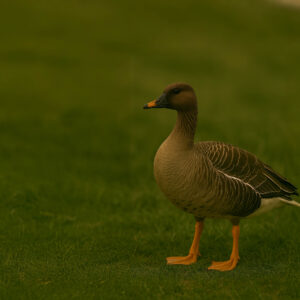
Tundra Bean Goose
🔍 Overview A scarce winter visitor to Sussex, typically in cold spells and often among other grey geese. 🪶 Key Identification Features Dark brown plumage Orange legs and bill (with a black base) Stockier and darker than Pink-footed Goose 🗺️ Habitat & Distribution Most likely in the Arun Valley, Amberley Wild Brooks, or among White-fronted...
Turtle Dove
🔍 Overview A symbol of summer, now sadly rare in Sussex due to habitat loss and hunting on migration routes. 🪶 Key Identification Features Mottled chestnut and black back Delicate neck pattern Gentle, purring song 🗺️ Habitat & Distribution Breeds in East Sussex wood edges and scrub, found at Knepp, Upper Adur Valley and Woods...
Stock Dove
🔍 Overview Often overlooked, the Stock Dove is a quieter cousin of the Woodpigeon. Common across Sussex farmland and parkland. 🪶 Key Identification Features Size: Medium (30–33 cm) Plumage: Blue-grey with iridescent green neck patch Markings: No white neck or wing patches (unlike Woodpigeon) Eyes: Dark, giving soft expression 🗺️ Habitat & Distribution Frequents woodland...
Stone-curlew
🔍 Overview A rare visitor to Sussex, the Stone-curlew is more typical of chalk grassland and heath in eastern and southern England. Scarce breeding summer visitor and passage migrant. 🪶 Key Identification Features Big yellow eyes and thick yellow legs Cryptically patterned and hunched posture Nocturnal tendencies 🗺️ Habitat & Distribution Very rare in Sussex—occasional...
Tree Sparrow
🔍 Overview A scarce and declining farmland bird in Sussex, distinguished from the House Sparrow by its rich chestnut crown. Scarce passage migrant and winter visitor. 🪶 Key Identification Features Chestnut head and nape Distinct black cheek spot Slimmer and more agile than House Sparrow 🗺️ Habitat & Distribution Now rare in Sussex, but may...
Skylark
🔍 Overview A classic voice of Sussex’s open fields and downs. Known for its beautiful, sustained song flight over farmland and heath. 🪶 Key Identification Features Size: Medium (18 cm) Plumage: Brown and streaked Crest: Small, often raised Tail: Short with white edges Flight: Strong vertical song flights 🗺️ Habitat & Distribution Breeds in arable...
Song Thrush
🔍 Overview A sweet-voiced garden and woodland thrush with a stronghold in Sussex. Known for repeating phrases in its rich song. 🪶 Key Identification Features Size: Medium (23 cm) Plumage: Brown above, creamy below with dark spots Bill: Yellowish, short Behaviour: Often seen cracking snail shells 🗺️ Habitat & Distribution Common in gardens, parks, woodlands,...
Shoveler
🔍 Overview A distinctive dabbling duck with a comically large bill, found widely in Sussex in winter and during passage. 🪶 Key Identification Features Large spatula-shaped bill Male: green head, white breast, chestnut flanks Feeds by sweeping bill side-to-side 🗺️ Habitat & Distribution Found in Pulborough Brooks, Goring Gap, Brighton Marina, and Brooklands, mainly September–May....