Bird Month (Small Numbers): March

Home » March » Page 4
Little Ringed Plover
Bird

Little Ringed Plover

🔍 Overview A dainty wader that breeds on bare, stony ground. Summer visitor and breeder in parts of Sussex. 🪶 Key Identification Features Sandy brown upperparts, white belly Bright yellow eye-ring Smaller and darker than Ringed Plover 🗺️ Habitat & Distribution Breeds at gravel pits, reservoirs, and quarries, including Arlington Reservoir and Rye Harbour. 🎶...

Lesser Whitethroat
Bird

Lesser Whitethroat

📍 Local Expert Tip “The Lesser Whitethroat locally, is far less common than Common Whitethroat and much more elusive. Best found by learning its song and then patiently waiting for a view. Mill Hill generally has 2 – 3 pairs and the Downs Link path heading north from the A27 is another reliable location.” 🔍 Overview...

Lesser Spotted Woodpecker
Bird

Lesser Spotted Woodpecker

🔍 Overview Britain’s smallest and rarest woodpecker. Once more widespread in Sussex, now very scarce and local. 🪶 Key Identification Features Size of a sparrow Black and white barred back Male: Small red crown; Female: Lacks red 🗺️ Habitat & Distribution Prefers mature deciduous woodland, especially West Sussex Weald and Ashdown Forest. Most active in...

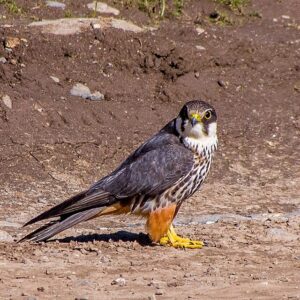
Hobby
Bird

Hobby

🔍 Overview A dashing summer falcon, superb aerial hunter of dragonflies and hirundines. Increasingly regular breeder in Sussex. 🪶 Key Identification Features Slim, falcon-shaped Slate-grey above, orange ‘trousers’ below Striking moustachial stripe 🗺️ Habitat & Distribution Breeds near Upper Adur Valley and Cissbury. Seen across Sussex in April–October. 🎶 Voice & Behaviour Sharp “kik-kik-kik” calls....

Hawfinch
Bird

Hawfinch

🔍 Overview Britain’s largest finch, known for its massive bill and shy nature. Scarce in Sussex but winter sightings increasing. 🪶 Key Identification Features Bulky finch with thick neck Huge, powerful bill Orange-brown body, black-and-white wings 🗺️ Habitat & Distribution Seen at Arundel, Ebernoe, Brede High Woods, especially in late winter and early spring. 🎶...

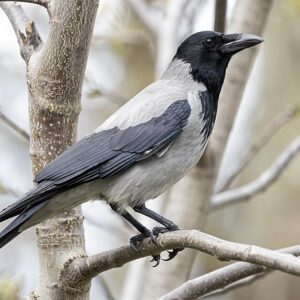
Hooded Crow
Bird

Hooded Crow

🔍 Overview The Hooded Crow is a rare vagrant in Sussex but occasionally spotted along coasts and estuaries. 🪶 Key Identification Features Size: Large (45–47 cm) Plumage: Grey body with black head, wings, and tail Distinctive Marks: Pale grey contrasted with black Bill: Strong and black Tail: Square Flight: Steady 🗺️ Habitat & Distribution Very rare...

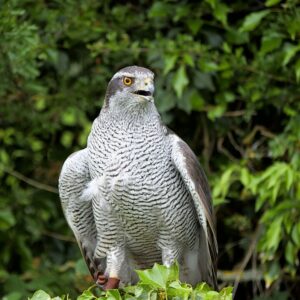
Goshawk
Bird

Goshawk

🔍 Overview A powerful and secretive raptor, often dubbed the ‘phantom of the forest’. Rarely seen, but breeds in parts of Sussex. 🪶 Key Identification Features Size: Larger and bulkier than a Sparrowhawk Male: Slate grey above, pale below with fine barring Female: Bigger, browner Broad wings, long tail 🗺️ Habitat & Distribution Breeds in...

Eurasian Bittern
Bird

Eurasian Bittern

🔍 Overview A shy and rare reedbed resident, hard to see but occasionally present in Sussex. Known for its booming call. 🪶 Key Identification Features Cryptic, streaked brown plumage Stocky body, thick neck, dagger-like bill Often freezes with neck raised 🗺️ Habitat & Distribution Winter visitor and rare breeder in large reedbeds like Rye Harbour,...

Common Whitethroat
Bird

Common Whitethroat

🔍 Overview A lively warbler of Sussex hedgerows and scrub, the Whitethroat is known for its chattering song and concealed habitat preference. 🪶 Key Identification Features Size: Small (13–14 cm) Plumage: Grey head, reddish-brown back, white throat Distinctive Marks: White throat contrasting with grey head Bill: Thin and pointed Tail: Medium Flight: Short bursts with...

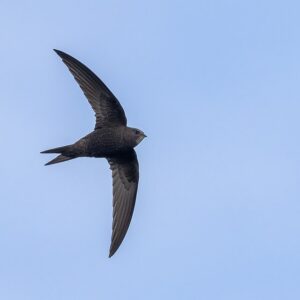
Common Swift
Bird

Common Swift

🔍 Overview The quintessential summer sky-dweller in Sussex, Swifts arrive in May and leave by August. Spend nearly all daylight hours on the wing. 🪶 Key Identification Features Size: Medium (16–17 cm) Plumage: Uniform dark brown Distinctive Marks: Scythe-shaped wings, forked silhouette Bill: Very small Tail: Deeply forked but short Flight: Fast, acrobatic 🗺️ Habitat...