📍 Local Expert Tip “At Shoreham Harbour, birds regularly roost at high tide on the old wooden jetty on the west side but can be hard to spot. Shortly before and after high tide, birds can feed relatively close on the concrete ledges of the western harbour arm.” 🔍 Overview A hardy wader of rocky...
Raven
🔍 Overview The Raven is a powerful and intelligent corvid, now increasingly common in Sussex, especially near cliffs and upland woods. Fairly common breeding resident; first bred in modern era in 2001. 🪶 Key Identification Features Size: Very large (60–67 cm)Plumage: Glossy blackDistinctive Marks: Thick neck, heavy bill, diamond-shaped tailBill: Large and curvedTail: Wedge-shapedFlight: Soaring, acrobatic...
Razorbill
🔍 Overview The Razorbill is a chunky seabird seen off Sussex in winter or during migration. Related to puffins and guillemots. Common winter visitor and fairly common passage migrant; last bred in 1878. 🪶 Key Identification Features Size: Medium auk (37–39 cm)Plumage: Black above, white belowDistinctive Marks: Thick black bill with white lineBill: Stubby and deepTail:...
Oystercatcher
📍 Local Expert Tip “The Oystercatcher is a distinctive and noisy local resident which is adapting to man by breeding on flat roofs close to the river such as at Ricardo’s factory, on the airfield and even on apartment block roofs in Shoreham town centre.” 🔍 Overview Bold, black-and-white with a vivid orange bill, the...
Peregrine
🔍 Overview The world’s fastest bird, this powerful falcon is now a regular breeder on cliffs and urban buildings in Sussex. 🪶 Key Identification Features Slate-grey upperparts Heavy black moustache mark Bullet-shaped in flight with rapid wingbeats and steep dives 🗺️ Habitat & Distribution Breeds on Shoreham Cement Works, Chichester Cathedral. Seen on Shoreham Harbour...
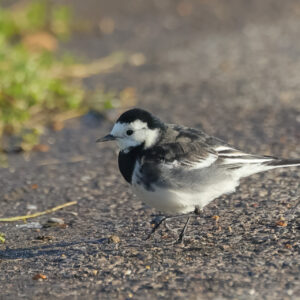
Pied Wagtail
🔍 Overview Common resident; passage migrant and winter visitor. A highly mobile black-and-white bird with a constantly bobbing tail, common across Sussex towns and countryside. 🪶 Key Identification Features Size: Small (18 cm) Plumage: Black back and bib, white face, grey wings Tail: Long and always wagging Flight: Quick and bounding 🗺️ Habitat &...
Pintail
The Pintail is a sleek and elegant winter duck in Sussex, known for its long tail and graceful posture. A regular visitor to floodplains and estuaries. 🪶 Key Identification Features Size: Large (55–65 cm)Plumage: Chocolate-brown head (male), pale grey body, long tailDistinctive Marks: Needle-like tail, white neck stripeBill: Blue-greyTail: Long and pointed in malesFlight: Smooth and...
Mute Swan
🔍 Overview A majestic symbol of British waterways, the Mute Swan is common across Sussex’s lakes, rivers, and estuaries. 🪶 Key Identification Features Size: Very large (140–160 cm wingspan)Plumage: All whiteDistinctive Marks: Orange bill with black knobBill: Large and curvedTail: ShortFlight: Heavy wingbeats with loud whoosh 🗺️ Habitat & Distribution Seen across Sussex on rivers, lakes,...
Northern Wheatear
📍 Local Expert Tip “The Wheatear is a a regular passage migrant in Spring and Autumn. Shoreham Fort often records the first birds heading north in Spring from mid-March but can be found anywhere along the coast. Regularly seen during Autumn migration in the Downs along the Monarch’s Way footpath, Truleigh Hill, Cissbury Ring etc.” 🔍...
Nuthatch
🔍 Overview An acrobatic woodland resident that creeps down tree trunks headfirst. Widespread in Sussex’s mature broadleaf woodlands. 🪶 Key Identification Features Size: Medium-small (14 cm) Plumage: Blue-grey upperparts, buff underparts Markings: Bold black eye-stripe Posture: Often seen head-down on tree trunks 🗺️ Habitat & Distribution Frequents deciduous woodlands, parks, and large gardens with mature...