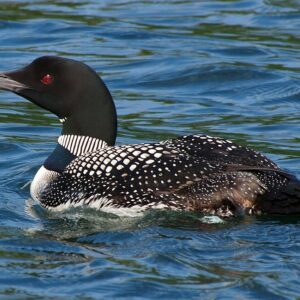
Image Attribution: John Picken from Chicago, USA, CC BY 2.0, via Wikimedia Commons 🔍 Overview A large, impressive diver, mostly seen off the Sussex coast in winter. Known for its haunting breeding calls in summer range. 🪶 Key Identification Features Winter plumage: Blackish above, white below, large dagger-like bill Summer: Black-and-white checkered plumage (rare in...
Location: Brighton Marina
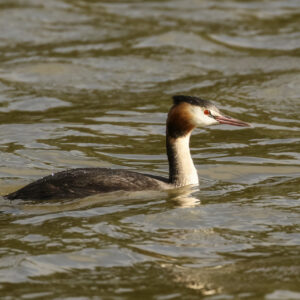
Great Crested Grebe
🔍 Overview Elegant and ornate, the Great Crested Grebe is a classic waterbird, known for its beautiful breeding display and slender profile. 🪶 Key Identification Features Size: Medium-large (46–51 cm)Plumage: White neck, black cap, chestnut and black face frillsDistinctive Marks: Elaborate head plumes (breeding)Bill: Long and pointedTail: Short and hiddenFlight: Rarely seen flying 🗺️ Habitat...
Great Black-backed Gull
📍 Local Expert Tip “The Great Black-backed Gull is the largest gull in the world and a frequent sight anywhere along the tideline and at low tide in the Adur Estuary around the Toll Bridge. Breeds locally but very under-recorded so do keep an eye on local rooftops including on industrial estates.” 🔍 Overview The largest...
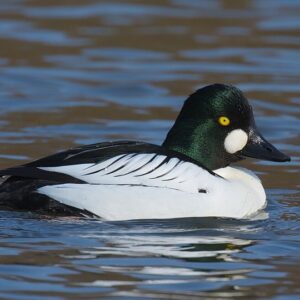
Goldeneye
Image Attribution: https://www.flickr.com/photos/sbern/, CC BY 2.0, via Wikimedia Commons 🔍 Overview A striking diving duck, found in Sussex on freshwater lakes and reservoirs in winter. 🪶 Key Identification Features Male: Black-and-white with greenish head and golden eye Female: Grey body, brown head, yellow eye Both show a short, triangular head shape 🗺️ Habitat & Distribution...
Garganey
🔍 Overview A scarce and elegant spring migrant, typically seen in Sussex from March to May. 🪶 Key Identification Features Male: Distinctive white eye-stripe, brown head, patterned flanks Female: Similar to female Teal but lacks clear facial markings Small, fast-flying dabbling duck 🗺️ Habitat & Distribution Best seen at Pulborough Brooks, Rye Harbour, and Arundel...
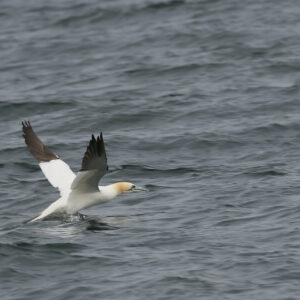
Gannet
🔍 Overview The UK’s largest seabird, the Gannet is a spectacular sight off Sussex coasts, plunge-diving with dramatic speed during migration. 🪶 Key Identification Features Size: Large seabird (87–100 cm)Plumage: White with black wingtips, yellowish headDistinctive Marks: Long, pointed wings and tailBill: Long, dagger-likeTail: Long and pointedFlight: Long, gliding arcs 🗺️ Habitat & Distribution Seen...
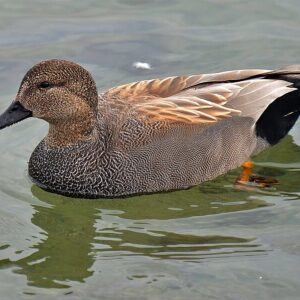
Gadwall
Image Attribution: Mykola Swarnyk, CC BY-SA 3.0, via Wikimedia Commons 🔍 Overview A subtly beautiful dabbling duck, found across Sussex wetlands in winter and breeding in select sites. Very scarce breeder and scarce summer non-breeder; fairly common winter visitor; scarce on observed passage. 🪶 Key Identification Features Male: Grey body, black rump, white wing patch...
Fulmar
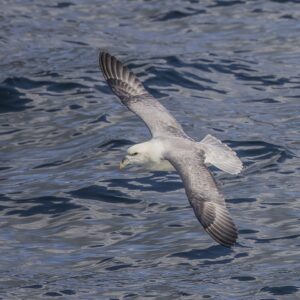
Image Attribution: Charles J. Sharp, CC BY-SA 4.0, via Wikimedia Commons 🔍 Overview A stiff-winged seabird seen gliding along Sussex cliffs and offshore waters, especially during spring and summer. 🪶 Key Identification Features Gull-like but with tubenose nostrils Pale grey wings, white head and body Stiff, straight-winged flight 🗺️ Habitat & Distribution Nests at Brighton...
Eurasian Whimbrel
📍 Local Expert Tip “The Whimbrel is a regular Spring and Autumn passage migrant with a few birds likely present most days from mid-April to end of May and again from mid-July to until end of September. Occasionally a bird will winter on the Adur Estuary.” 🔍 Overview A rare but regular spring and autumn passage...
Cormorant
🔍 Overview A sleek fisher and silhouette of Sussex rivers, lakes, and coast. The Cormorant is an adaptable and widespread bird often seen drying its wings. 🪶 Key Identification Features Size: Large (80–100 cm)Plumage: Dark, glossy black with greenish sheenDistinctive Marks: Hooked bill, yellow throat patchBill: Long, hookedTail: Long and wedge-shapedFlight: Straight, low over water...