🔍 Overview A sleek seabird, the Common Guillemot is mostly seen off Sussex during winter or on spring sea-watches, though breeding colonies lie further west. Last bred in 1904. 🪶 Key Identification Features Size: Medium (38–43 cm)Plumage: Chocolate-brown head and back, white underpartsDistinctive Marks: Thin bill, upright posture when perchedBill: Slim and blackTail: Very shortFlight:...
Location: Goring Gap
Common Eider
🔍 Overview Britain’s heaviest duck, more common in northern UK but occasionally seen off Sussex coasts. Scarce winter visitor and passage migrant; very scarce non-breeder in summer. 🪶 Key Identification Features Male: Bold black and white plumage with green nape Female: Mottled brown, heavy build Other: Long, sloping bill 🗺️ Habitat & Distribution Infrequent offshore...
Common Gull
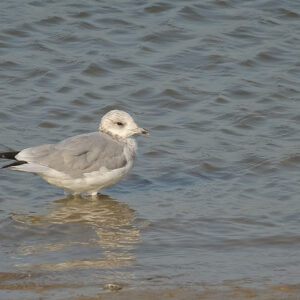
🔍 Overview A medium-sized gull frequenting Sussex coasts, estuaries, and inland waters—different from the larger black-headed and herring gulls. 🪶 Key Identification Features Size: Medium (42–45 cm) Plumage: Slim build, pale grey back Distinctive Marks: Greenish-yellow legs, dark wingtips Bill: Yellow with dark tip Tail: Square Flight: Light, buoyant glide 🗺️ Habitat & Distribution Seen...
Common Chiffchaff
🔍 Overview A small, greenish warbler, arriving in Sussex each spring. Known for its rhythmic, onomatopoeic “chiff-chaff” song. 🪶 Key Identification Features Size: Very small (10–12 cm) Plumage: Olive-grey above, pale below Distinctive Marks: Weak eye-stripe, greenish tones Bill: Thin and pointed Tail: Short Flight: Fluttery and hesitant 🗺️ Habitat & Distribution Found in woodlands,...
Coal Tit
🔍 Overview A small, agile woodland bird that often joins mixed flocks in Sussex woodlands and gardens. Less bold than the blue tit but just as active and vocal. 🪶 Key Identification Features Size: Small (11.5 cm) Plumage: Grey back, buff underparts Distinctive Marks: Black cap, white cheeks, and distinctive white nape patch Bill: Small...
Chaffinch
🔍 Overview One of the most colourful and common finches in Sussex. Males are especially bright in spring. Found in gardens, woodlands, and farmland year-round. 🪶 Key Identification Features Size: Small (14–15 cm) Plumage: Male – pink breast, blue-grey head; Female – duller brown Distinctive Marks: White wing bars and outer tail Bill: Short and...
Caspian Gull
🔍 Overview An increasingly regular large gull in Sussex, especially in winter. Tricky to identify but becoming more familiar to keen observers. 🪶 Key Identification Features Adult: Long-legged, pale grey mantle, small dark eye Other: Long, parallel-sided bill, flat-headed profile Juvenile: Pale underwing, long-winged appearance 🗺️ Habitat & Distribution Best found at landfill sites, gull...
Carrion Crow
🔍 Overview Intelligent, all-black crow commonly seen in fields, parks, and towns across Sussex. Wary but often curious, it adapts well to both rural and urban habitats. 🪶 Key Identification Features Size: Large (45–47 cm) Plumage: Entirely black with a slight sheen Distinctive Marks: Thick neck, robust bill Bill: Strong, black, slightly hooked Tail: Square...
Brent Goose
🔍 Overview Small and dark, the Brent Goose is a winter visitor to Sussex’s coastal mudflats. Most common from October to March, often in large flocks feeding on eelgrass and saltmarsh. 🪶 Key Identification Features Size: Small goose (55–61 cm)Plumage: Dark brown body with pale underpartsDistinctive Marks: Neat white neck patch (not always visible), white...
Blue Tit
🔍 Overview A colourful and acrobatic garden favourite across Sussex. Found in almost any habitat with trees and shrubs, especially fond of garden feeders. 🪶 Key Identification Features Size: Small (11–12 cm) Plumage: Blue, yellow, white, and green Distinctive Marks: Blue cap, white face with black eye stripe Bill: Short and stubby Tail: Short Flight:...