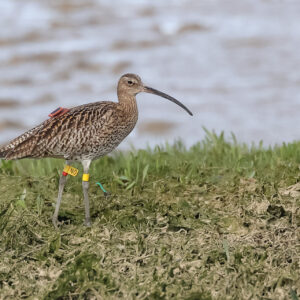
📍 Local Expert Tip “The Whimbrel is a regular Spring and Autumn passage migrant with a few birds likely present most days from mid-April to end of May and again from mid-July to until end of September. Occasionally a bird will winter on the Adur Estuary.” 🔍 Overview A rare but regular spring and autumn passage...
Location: Goring Gap
Dunnock
🔍 Overview A shy, understated passerine of Sussex gardens and shrubberies. Often mistaken for a sparrow, but with a skittish, furtive nature. 🪶 Key Identification Features Size: Small (14 cm) Plumage: Brown-streaked back, grey head, breast and throat Distinctive Marks: Plain grey face with thin bill Bill: Slender Tail: Medium Flight: Low and direct 🗺️...
Dunlin
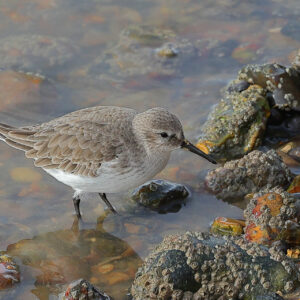
📍 Local Expert Tip “The Dunlin is much declined but a regular winter flock present on the mudflats opposite Coronation Green / Town Quay and between the Railway and Toll Bridges. Passage birds in breeding plumage turn up in Spring, often seen on the river edge anywhere between the Ferry Bridge and Toll Bridge.” 🔍 Overview...
Curlew
🔍 Overview The largest wader regularly recorded in Sussex, the Curlew’s haunting call is a highlight of coastal reserves and estuaries. 🪶 Key Identification Features Size: Large (50–60 cm) Plumage: Mottled brown Distinctive Marks: Very long, down-curved bill Bill: Long and curved Tail: Short and rounded Flight: Slow with deliberate wingbeats 🗺️ Habitat & Distribution...
Cormorant
🔍 Overview A sleek fisher and silhouette of Sussex rivers, lakes, and coast. The Cormorant is an adaptable and widespread bird often seen drying its wings. 🪶 Key Identification Features Size: Large (80–100 cm)Plumage: Dark, glossy black with greenish sheenDistinctive Marks: Hooked bill, yellow throat patchBill: Long, hookedTail: Long and wedge-shapedFlight: Straight, low over water...
Common Tern
🔍 Overview Nicknamed the “sea swallow,” the Common Tern is a graceful summer breeder in Sussex, nesting on shingle islands and lagoons. 🪶 Key Identification Features Size: Medium (31–35 cm)Plumage: Pale grey with black capDistinctive Marks: Long wings, forked tail, red bill with black tipBill: Slim and pointedTail: Deeply forkedFlight: Agile, buoyant 🗺️ Habitat &...
Common Starling
🔍 Overview Shiny and social, the Starling is a brilliant presence in Sussex fields and gardens. Known for its iridescent plumage and murmuring flocks. 🪶 Key Identification Features Size: Medium (20–22 cm) Plumage: Iridescent black with metallic purple/green sheen, speckled in winter Distinctive Marks: Pinkish legs Bill: Yellow in summer, dark in winter Tail: Short...
Common Shelduck
🔍 Overview Large, bold, and elegant, the Common Shelduck is often seen on Sussex estuaries and coastal lagoons, particularly at low tide. 🪶 Key Identification Features Size: Large duck (58–67 cm)Plumage: White with dark green head and chestnut breast bandDistinctive Marks: Red bill with knob on malesBill: Red, slightly upturnedTail: White with dark terminal bandFlight:...
Common Scoter
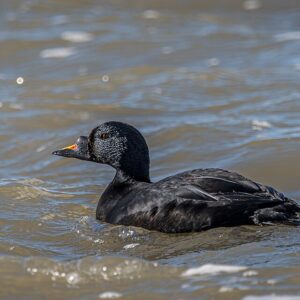
Image Attribution: Stephan Sprinz, CC BY-SA 4.0, via Wikimedia Commons 🔍 Overview The Common Scoter is a sea duck seen off the Sussex coast in winter or on spring migration. Usually in flocks, often distant offshore. 🪶 Key Identification Features Size: Medium (44–48 cm)Plumage: Males: black; Females: brown with paler cheeksDistinctive Marks: Males have a...
Common Redshank
📍 Local Expert Tip “The Estuary around the Ferry Bridge, Norfolk Bridge and RSPB Adur sections are favoured areas as is the area between the Railway and Old Toll Bridges. Widewater Lagoon is another reliable spot for relatively close sightings.” 🔍 Overview A medium-sized wader with striking red legs and a black-tipped red bill, the...