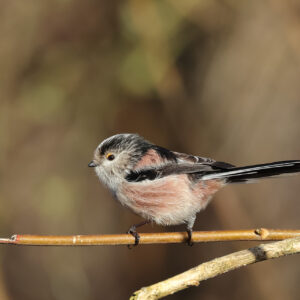
🔍 Overview A delightful and highly social garden and woodland bird. Easily recognisable by its fluffy body and very long tail. 🪶 Key Identification Features Size: Small (14 cm including tail) Plumage: Pale pink sides, black and white above Distinctive Marks: Very long tail, small round body Bill: Tiny and stubby Flight: Quick and undulating...
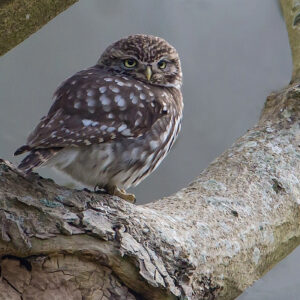
Little Owl
🔍 Overview A charming, stocky owl introduced to Britain in the 19th century. Now widespread in Sussex farmland and parkland. 🪶 Key Identification Features Small, rounded body Yellow eyes with expressive white eyebrows Short tail, direct flight 🗺️ Habitat & Distribution Favors open countryside with trees, barns, or old orchards. Seen in Upper Adur Valley,...
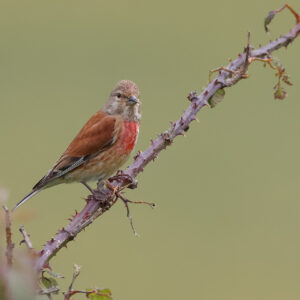
Linnet
🔍 Overview Common but decreasing resident and partial migrant. A finch of open countryside and coastal scrub, Linnets are declining in parts of Sussex but remain in farmland and heathlands. 🪶 Key Identification Features Size: Small (13–14 cm) Male Plumage: Grey head, red breast and forehead in breeding season Female/Non-breeding: Plain brown Bill: Slim...
Lesser Whitethroat
📍 Local Expert Tip “The Lesser Whitethroat locally, is far less common than Common Whitethroat and much more elusive. Best found by learning its song and then patiently waiting for a view. Mill Hill generally has 2 – 3 pairs and the Downs Link path heading north from the A27 is another reliable location.” 🔍 Overview...
Lesser Black-backed Gull
🔍 Overview A powerful gull with dark slate-grey back, the Lesser Black-backed Gull winters along Sussex coast and inland waters. Scarce breeder. 🪶 Key Identification Features Size: Large gull (55–60 cm)Plumage: White body; dark grey backDistinctive Marks: Yellow legs, white headBill: Yellow with red spotTail: White with dark bandFlight: Strong, steady glides 🗺️ Habitat & Distribution...
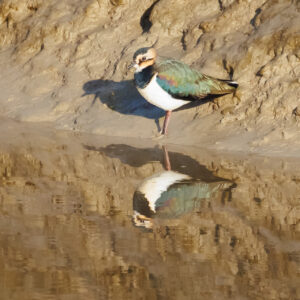
Lapwing
📍 Local Expert Tip “The Lapwing is a regular but much declined winter visitor. The island by the Toll Bridge is a regular feeding area. At high tide, birds roost on the airfield but easily disturbed.” 🔍 Overview A dramatic and beloved farmland wader, the Lapwing is iconic in Sussex with its crest and acrobatic displays....
Kingfisher
🔍 Overview A flash of electric blue by Sussex waters — the Kingfisher is small but striking, and the emblem of healthy rivers. 🪶 Key Identification Features Size: Tiny (16–17 cm)Plumage: Bright blue back, orange underpartsDistinctive Marks: Large head, dagger billBill: Long and blackTail: Short and squareFlight: Fast, direct, just above water 🗺️ Habitat & Distribution...
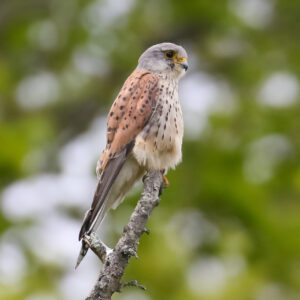
Kestrel
🔍 Overview A familiar falcon, the Kestrel hovers vigilantly over Sussex fields and roadsides, searching for small prey. 🪶 Key Identification Features Size: Medium raptor (34–38 cm)Plumage: Reddish-brown back, grey head (male)Distinctive Marks: Hovering behaviourBill: HookedTail: Long, fannedFlight: Stays stationary in wind 🗺️ Habitat & Distribution Open farmland, roadside verges, heathland — look near Cissbury Ring...
House Sparrow
🔍 Overview A familiar and widespread resident in Sussex, often associated with human settlements. Numbers declined but remain strong in many towns. 🪶 Key Identification Features Size: Small (14–15 cm) Plumage (male): Grey crown, black bib, chestnut nape Plumage (female): Plain brown with pale eyebrow Bill: Thick and conical Flight: Direct, fast with quick wingbeats...
Hobby
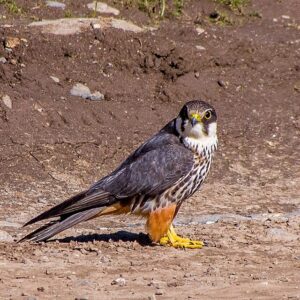
Image Attribution: Mike Prince from Bangalore, India, CC BY 2.0, via Wikimedia Commons 🔍 Overview A dashing summer falcon, superb aerial hunter of dragonflies and hirundines. Increasingly regular breeder in Sussex. 🪶 Key Identification Features Slim, falcon-shaped Slate-grey above, orange ‘trousers’ below Striking moustachial stripe 🗺️ Habitat & Distribution Breeds near Upper Adur Valley and...