🔍 Overview Quiet and striking, the Bullfinch is a shy woodland resident in Sussex. Often seen in pairs, it’s more often heard by its soft call than seen clearly. 🪶 Key Identification Features Size: Small (15–17 cm)Plumage: Males have rosy-pink underparts; females are more brownDistinctive Marks: Black cap and face, thick neck, white rumpBill: Short,...
Canada Goose
🔍 Overview A large, familiar goose introduced from North America. Now widespread across Sussex, especially near lakes, ponds, and parklands. 🪶 Key Identification Features Size: Large (90–100 cm) Plumage: Brown body, black neck and head with white chin strap Distinctive Marks: White cheek patch Bill: Broad and black Tail: Short and square Flight: Powerful, slow...
Carrion Crow
🔍 Overview Intelligent, all-black crow commonly seen in fields, parks, and towns across Sussex. Wary but often curious, it adapts well to both rural and urban habitats. 🪶 Key Identification Features Size: Large (45–47 cm) Plumage: Entirely black with a slight sheen Distinctive Marks: Thick neck, robust bill Bill: Strong, black, slightly hooked Tail: Square...
Blackbird
🔍 Overview One of the most familiar garden birds in Sussex. Males are sleek black with a bright yellow bill, while females are dark brown. Common across gardens, woodlands, and parks. 🪶 Key Identification Features Size: Medium (24–25 cm) Plumage: Black (male), brown (female) Distinctive Marks: Yellow bill and eye-ring (male) Bill: Strong and pointed...
Blackcap
🕊️ Blackcap 🔍 Overview A sweet-singing warbler, the Blackcap is both a breeding bird and winter visitor in Sussex. Males are known for their rich, fluting song and distinctive cap. 🪶 Key Identification Features Size: Small (13–15 cm)Plumage: Grey-brown with pale underpartsDistinctive Marks: Male has a black cap; female has a chestnut capBill: Short and...
Blue Tit
🔍 Overview A colourful and acrobatic garden favourite across Sussex. Found in almost any habitat with trees and shrubs, especially fond of garden feeders. 🪶 Key Identification Features Size: Small (11–12 cm) Plumage: Blue, yellow, white, and green Distinctive Marks: Blue cap, white face with black eye stripe Bill: Short and stubby Tail: Short Flight:...
Black-tailed Godwit
🔍 Overview Elegant and long-legged, the Black-tailed Godwit is a regular visitor to Sussex wetlands. Numbers peak during passage and winter, with flocks frequenting Pulborough Brooks and Adur Valley. 🪶 Key Identification Features Size: Large wader (40–44 cm)Plumage: Grey in winter; rich orange and patterned in breeding seasonDistinctive Marks: Bold black tail, white wing barBill:...
Black Tern
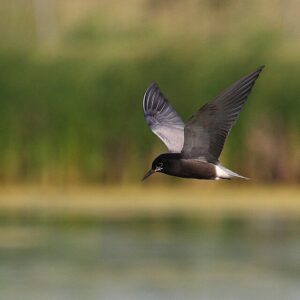
🔍 Overview A graceful marsh tern seen on migration in spring and autumn. Not a regular breeder in the UK. 🪶 Key Identification Features Breeding: Smoky-black body, grey wings Non-breeding: Pale grey above, white below, dusky breast sides Other: Slender, buoyant flyer 🗺️ Habitat & Distribution Passes through Sussex during April–May and August–October. Look for...
Black-headed Gull
🔍 Overview The most familiar gull in Sussex, especially around coastal towns, wetlands, and inland reservoirs. Not truly black-headed – its breeding plumage features a chocolate-brown hood. 🪶 Key Identification Features Size: Medium (35–39 cm) Plumage: White with grey wings, dark head in summer Distinctive Marks: Red bill and legs, white wing tips Bill: Slim,...
Arctic Tern
🔍 Overview Delicate and graceful, the Arctic Tern is a long-distance migrant famous for its epic pole-to-pole journey. Every year, Arctic Terns migrate from the Arctic Circle to the Antarctic Circle—a round-trip journey of about 30,000 kilometers. It is known as the ‘sea swallow’ because of its long tail streamers. In Sussex, it’s mainly seen...